

World Cup 2026 Mexico City is the beating heart of the tournament’s opening chapter. On June 11, 2026, the tournament’s opening ceremony and opening match take place at Estadio Azteca. For any fan making the trip, Mexico City is one of the most rewarding cities on earth: 21 million people, extraordinary food, ancient ruins 45 minutes from the centre, and a football culture unlike anywhere else. Reference: FIFA
This guide covers everything — the stadium, how to get there, where to stay, what to see, what to eat, safety tips and the practical details that make a trip to CDMX straightforward even for first-time visitors.
TL;DR
- Mexico City hosts 5 World Cup matches at Estadio Azteca — including the opening ceremony and opening match on June 11
- Estadio Azteca official FIFA venue capacity: 83,000
- Getting there: Metro Line 2 to Tasqueña, then light rail (Tren Ligero) to Estadio Azteca — simple and cheap
- Best areas to stay: Polanco, Roma, Condesa — central, well-connected and excellent for food and nightlife
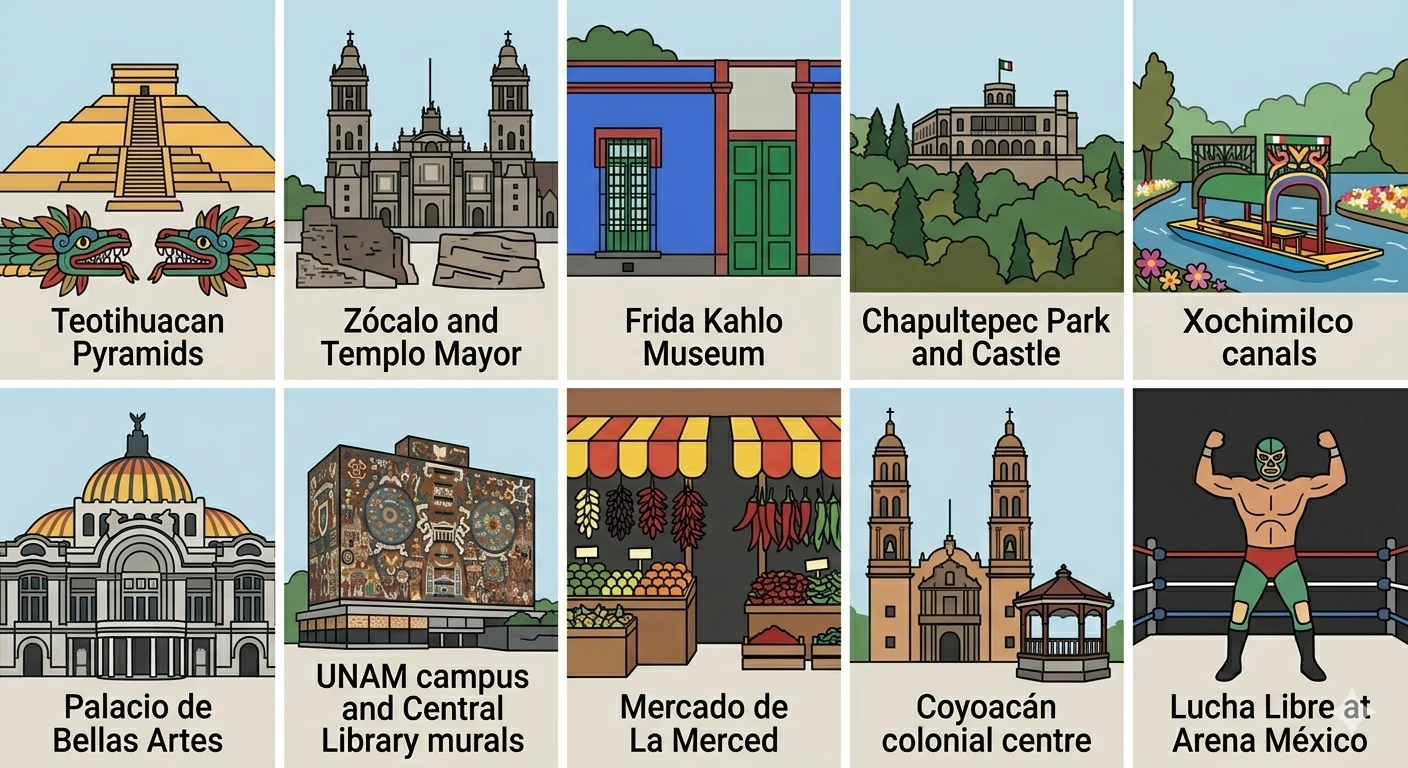
- Top attractions: Teotihuacan pyramids, Zócalo, Frida Kahlo Museum, Chapultepec Park, Xochimilco
- Safety: Main visitor areas are generally manageable for tourists — standard urban precautions apply
- Altitude: Mexico City sits at 2,240 metres above sea level — acclimatise before the match
SNIPPET BLOCK: Mexico City hosts the 2026 World Cup opening ceremony and 5 matches at Estadio Azteca — the legendary stadium that has hosted two World Cup finals (1970 and 1986). To reach the stadium, take Metro Line 2 to Tasqueña station then the Tren Ligero (light rail) direct to Estadio Azteca station. The best areas to stay are Polanco, Roma and Condesa — well-connected neighbourhoods with excellent restaurants and hotels.
World Cup 2026 Mexico City: Estadio Azteca, the World’s Most Historic Football Stadium
No stadium in world football carries more history than Estadio Azteca. Here is what every visiting fan needs to know.
- Capacity: 83,000
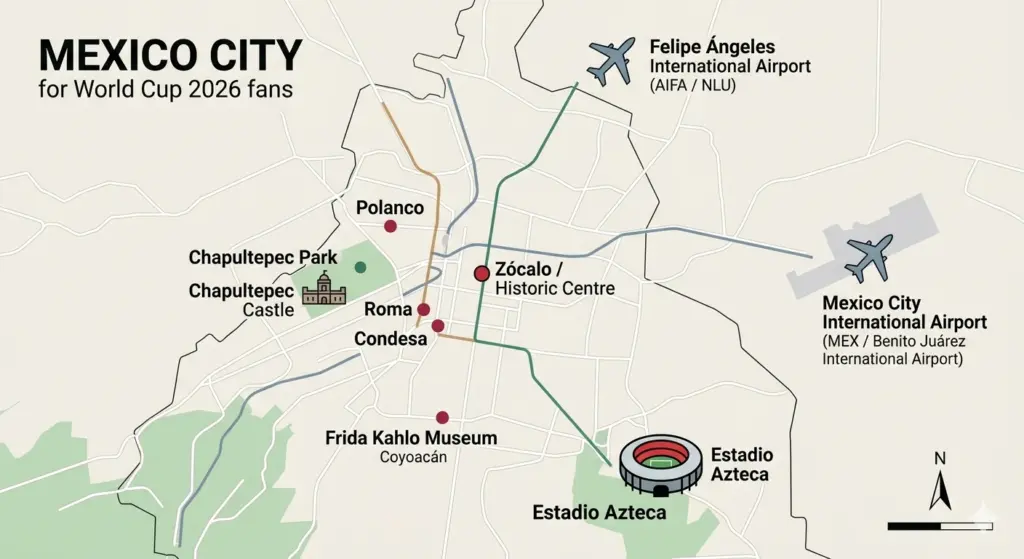
- Location: Calzada de Tlalpan 3465, Sta. Úrsula Coapa, Coyoacán, southern Mexico City
- Altitude: 2,240 metres above sea level — the highest-altitude World Cup venue in 2026
- First opened: 1966
- Home team: Club América and the Mexican national team
- Officially called during the tournament: “Mexico City Stadium” (FIFA removes commercial naming for the World Cup)
Reference: FIFA
World Cup history:
Estadio Azteca is the only stadium to have hosted two World Cup finals: the 1970 final (Brazil 4-1 Italy — Pelé’s last World Cup) and the 1986 final (Argentina 3-2 West Germany). It also hosted the 1986 “Hand of God” and “Goal of the Century” in the quarter-final between Argentina and England — two of the most famous moments in football history, both in the same match.
Matches at Estadio Azteca 2026:
| Match | Date | Time (local) |
|---|---|---|
| Opening Ceremony + Opening Match | June 11 | TBD |
| Group Stage match 2 | June 17 | TBD |
| Group Stage match 3 | June 24 | TBD |
| Round of 32 | June 30 | TBD |
| Round of 16 | July 5 | TBD |
The opening match features Mexico vs South Africa. Mexico City hosts three group-stage matches, one Round of 32 match and one Round of 16 match. Reference: FIFA World Cup 2026 Hospitality
World Cup 2026 Mexico City: The Opening Ceremony
The 2026 World Cup opening ceremony takes place at Estadio Azteca before the first match on June 11. FIFA has confirmed that Mexico City Stadium hosts the tournament opener, but specific ceremony details had not been fully announced as of March 2026. Reference: FIFA
What to expect:
- A pre-match stadium ceremony before kickoff
- Host-country and tournament branding across the venue
- Musical and cultural elements, with official details still to be confirmed
- A global live broadcast through official rights-holding broadcasters
If you hold a ticket for the opening match, arrive at least 3 hours early — the ceremony begins before kickoff, and stadium access will be at its busiest in the final stretch before the match.
World Cup 2026 Mexico City: Getting to Estadio Azteca
The stadium is in the south of Mexico City. Public transport is the best option — driving to a World Cup match in Mexico City during tournament conditions will be extremely difficult.
Option 1: Metro + Tren Ligero (RECOMMENDED)
This is the official recommended route — cheap, reliable and well-signposted.
Step-by-step:
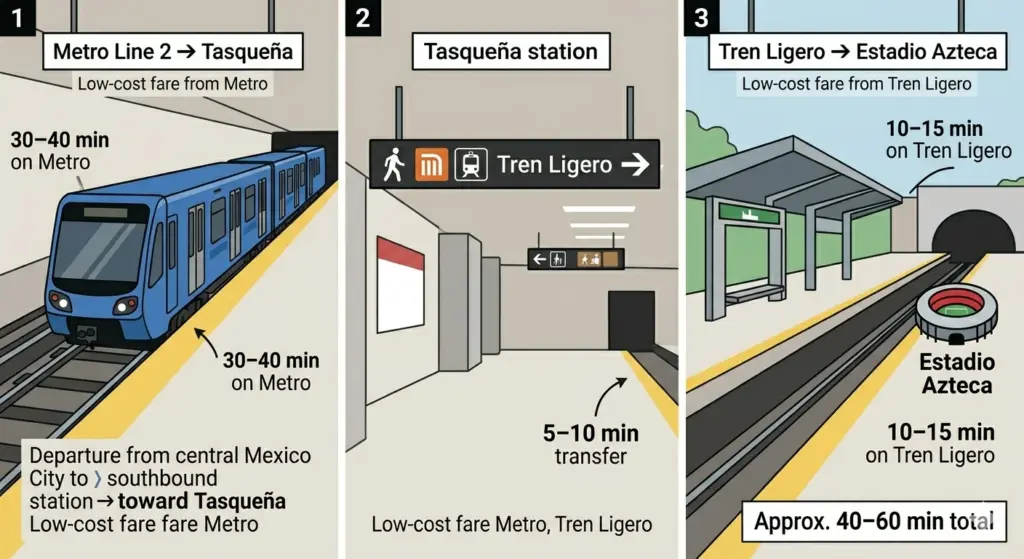
- Take Metro Line 2 (the blue line) southbound to Tasqueña station — the southern terminus of the line
- At Tasqueña, transfer to the Tren Ligero (light rail) — exit metro, follow signs for “Tren Ligero” or “Estadio Azteca”
- Take the Tren Ligero to Estadio Azteca station — the station is right by the stadium area
- Total journey from central Mexico City: approximately 40–60 minutes depending on your starting point
Cost: Metro rides cost approximately MXN 5 (about $0.25 USD). Tren Ligero is similarly priced. Extremely inexpensive.
Match day note: Expect crowding in the final hour before kickoff — allow extra time.
Uber and DiDi (a major ride-hailing app in Mexico) both operate in Mexico City. For non-match days, rideshare is convenient and inexpensive by international standards — a 20 km trip costs approximately MXN 150–250 ($8–13 USD). On match days, surge pricing and traffic will increase this significantly. Use only in-app — never hail a regular street taxi in Mexico City.
Important safety note: Only use registered apps (Uber, DiDi, Cabify) for taxis in Mexico City. Random street taxis are not recommended for tourists.
From Mexico City International Airport (AICM)
The main airport (Benito Juárez International, IATA: MEX) is in the east of the city.
- Metro Line 5 from Terminal 1 (Terminal Aérea station) to Pantitlán, transfer to Line 2 south to Tasqueña. Total: approximately 60–80 minutes.
- Taxi/Uber: Book through the official airport taxi kiosk (safer than street taxis) or Uber from the terminal. Allow 45–90 minutes depending on traffic.
Felipe Ángeles International Airport (AIFA, IATA: NLU): Located about 45–50 km north of the city. Take the airport bus to Buenavista station, then metro to central connections. Reference: AICM Metro Info
Where to Stay
Best Neighbourhoods for World Cup Fans
Polanco — The upscale choice. Tree-lined streets, luxury hotels, excellent restaurants, designer shops, Chapultepec Park on its southern edge. Safe, tourist-friendly, walkable. Best for: fans wanting comfort and convenience. Distance to Azteca: 40 minutes by metro.
Roma Norte / Condesa — The traveller favourite. Bohemian atmosphere, independent restaurants, coffee shops, art galleries, parks. Mid-range to boutique hotels. Very safe for the neighbourhood type. One of the best urban food scenes in Latin America. Distance to Azteca: 45 minutes by metro.
Centro Histórico (Historic Centre) — Maximum cultural immersion. The Zócalo, Templo Mayor, Metropolitan Cathedral — all steps from your hotel. More chaotic, more budget options, needs more urban awareness. Distance to Azteca: 50 minutes by metro.
Coyoacán — Quiet, colonial, charming. The Frida Kahlo Museum is here. Further from the tourist centre but genuinely beautiful neighbourhood. Closest to the stadium geographically. Distance to Azteca: 20–25 minutes by Tren Ligero.
Approximate Hotel Prices (per night, June 2026)
| Neighbourhood | Budget | Mid-range | Boutique/Luxury |
|---|---|---|---|
| Polanco | $120–180 | $200–$350 | $400–$800+ |
| Roma/Condesa | $80–$130 | $150–$250 | $280–$450 |
| Centro Histórico | $50–$90 | $110–$180 | $200–$350 |
| Coyoacán | $60–$100 | $130–$200 | N/A |
Opening ceremony week (June 9–12): Expect higher prices. Book as early as possible.
World Cup 2026 Mexico City: The Altitude
Mexico City sits at 2,240 metres above sea level — significantly higher than most cities most fans come from. At this altitude:
- Air contains approximately 25% less oxygen than at sea level
- Exertion feels harder — climbing stairs, walking quickly or drinking alcohol will hit harder than expected
- Sun is more intense — UV radiation is stronger at altitude
Tips for fans:
- Arrive at least 2 days before your match to acclimatise — preferably 3 days
- Drink water constantly — dehydration happens faster at altitude
- Reduce alcohol intake in the first 48 hours — alcohol hits harder at altitude and worsens dehydration
- Headaches are normal in the first 24–48 hours — ibuprofen or paracetamol is fine
- Avoid strenuous exercise on your first full day
For players: The altitude is a significant factor. Teams from low-altitude nations arriving without preparation will notice performance drops. Mexico’s national team trains at altitude regularly — this is a genuine home advantage.
Top 10 Things to Do in Mexico City
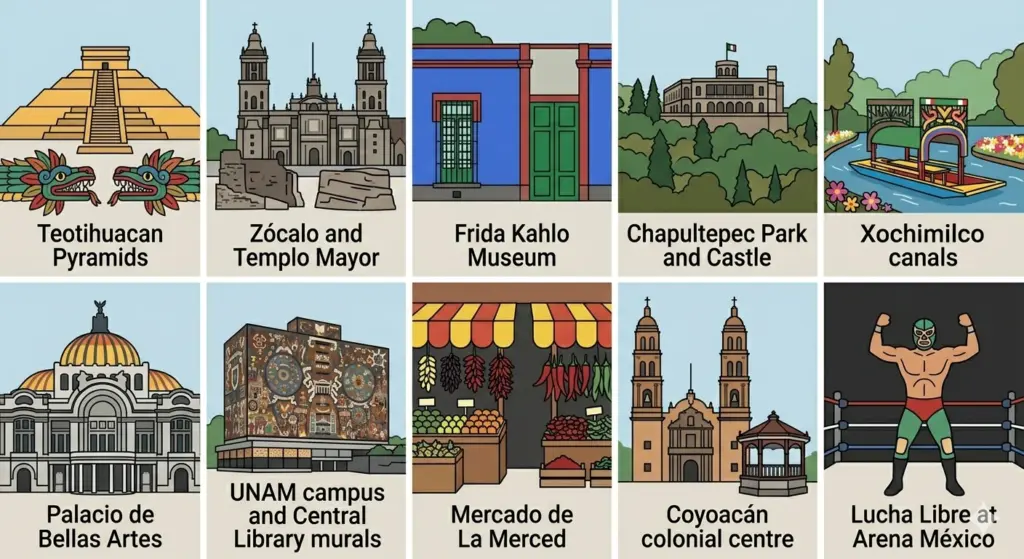
1. Teotihuacan Pyramids — Day Trip Essential
The ancient city of Teotihuacan lies 45–60 minutes from central Mexico City by bus or car. The Pyramid of the Sun is the third largest pyramid in the world. You can climb it. The Avenue of the Dead stretches 2.5 kilometres between the pyramids of the Sun and Moon — one of the great ancient urban spaces on earth. Go early (gates open at 8am) to beat the heat and crowds.
- Getting there: Buses from Terminal del Norte bus station (Metro Autobuses del Norte, Line 5)
- Time needed: Full day
- Cost: Approximately MXN 100 ($5 USD) entry
2. Zócalo and the Historic Centre
Mexico City’s central plaza — the Zócalo — is one of the largest public squares in the world. Surrounding it: the Metropolitan Cathedral (begun in 1573), the National Palace (with Diego Rivera murals inside — free), and the ruins of the Aztec Templo Mayor. All within walking distance of each other. This is where Mexico’s history lives.
- Getting there: Metro Line 2, Zócalo station
- Time needed: Half day
3. Frida Kahlo Museum (La Casa Azul)
The Blue House in Coyoacán where Frida Kahlo was born, lived and died. Now a museum containing her personal belongings, artwork, studio and garden. One of the most visited sites in the city — book tickets online well in advance (often sells out weeks ahead).
- Getting there: Metro Line 3 to Viveros, walk 15 minutes; or taxi from Roma/Condesa
- Time needed: 2–3 hours
4. Chapultepec Park and Castle
The largest urban park in Latin America — bigger than Central Park and Hyde Park combined. The castle on the hilltop (Castillo de Chapultepec) was the residence of Mexico’s emperors and now houses the National Museum of History. The park has multiple museums, a zoo (free entry), lakes and cycling paths. Perfect for a match-day morning.
- Getting there: Metro Line 1, Chapultepec station (right at the park entrance)
- Time needed: Half day to full day
5. Xochimilco Canals
A UNESCO World Heritage Site — a network of ancient Aztec waterways south of the city. Rent a colourful trajinera (flat-bottomed boat) with friends and float through the canals while food and drink vendors paddle alongside you. One of the most uniquely Mexican experiences possible.
- Getting there: Metro Line 2 to Tasqueña, then Tren Ligero to Xochimilco (same line as the stadium)
- Time needed: Half day (go on a Saturday or Sunday for the full atmosphere)
6. Mercado de La Merced and Street Food
La Merced is Mexico City’s largest traditional market — overwhelming, alive, and the best introduction to Mexican food culture. Beyond La Merced: the street food of Roma and Condesa neighbourhoods is world-class. Tacos al pastor, tamales, tlayudas, pozole, chiles rellenos — Mexico City’s food scene is consistently ranked among the best in the world.
7. UNAM Campus (Ciudad Universitaria)
The National Autonomous University of Mexico campus is a UNESCO World Heritage Site — the mosaic-covered Central Library by Juan O’Gorman is one of the most photographed buildings in Latin America. Also on campus: the Olympic Stadium (used in 1968) and the contemporary art museum (Museo Universitario Arte Contemporáneo, MUAC).
8. Palacio de Bellas Artes
The Art Nouveau/Art Deco concert hall and museum on the edge of the Historic Centre. Inside: murals by Diego Rivera, David Alfaro Siqueiros and José Clemente Orozco — the giants of Mexican muralism. The building itself is a work of art. Free or low-cost entry.
9. Coyoacán Colonial Centre
The neighbourhood where Frida Kahlo and Leon Trotsky both lived — and where both museums are located. The central plaza (Jardín Centenario) is surrounded by colonial churches, cafes and artisan markets on weekends. Quieter than the Historic Centre, more authentically neighbourhood-feeling.
10. Lucha Libre
The legendary Mexican masked wrestling — colourful, theatrical, genuinely entertaining even if you know nothing about wrestling. The Arena México in Doctores neighbourhood hosts fights on Tuesday and Friday nights, occasionally on Sundays. Tickets from approximately MXN 100–400 ($5–20 USD). An unmissable Mexico City experience.
Mexico City Food Guide for World Cup Fans
Mexico City’s food culture is extraordinary. Practical guide for fans:
Tacos al pastor: Pork cooked on a vertical spit (like a shawarma), served on small corn tortillas with pineapple, onion and coriander. The quintessential Mexico City street food. Available everywhere, all day. Cost: MXN 20–30 per taco.
Chilaquiles: A breakfast staple — fried tortilla chips in red or green salsa, topped with cream, cheese, and often a fried egg. Order at virtually any local restaurant for breakfast.
Pozole: A rich, warming soup made with hominy corn and meat (pork or chicken), served with shredded lettuce, radish and oregano. Comfort food.
Mezcal: Mexico City’s cocktail culture has exploded. Mezcal (smoky agave spirit) bars are everywhere in Roma and Condesa. Try a mezcal sour or a paloma.
Where to eat:
- Taqueria El Califa de León (Guerrero) — possibly the best tacos in the city; single-filling tacos cooked to perfection
- Contramar (Roma) — legendary seafood; tuna tostadas are world-famous; book in advance
- Mercado Medellín (Roma) — neighbourhood market with excellent cheap food stalls
- Pujol — Mexico City’s most famous fine dining restaurant (Chef Enrique Olvera); book months in advance if interested
World Cup 2026 Mexico City: Safety Guide for Fans
Mexico City has a reputation that puts some international visitors off. The reality for tourists in the main visitor areas is more manageable than that reputation suggests. Practical guidance: Reference: Mexico City Official Safety Tips
Safe areas for tourists: Polanco, Roma, Condesa, Coyoacán, Historic Centre (daytime and early evening), Xochimilco (daytime). These are the areas you will spend most time in.
Areas to avoid: Northern and eastern industrial/residential areas far from tourist zones — you will not need to go to these areas.
General rules:
- Use only Uber, DiDi or Cabify for transport — not random street taxis
- Keep your phone in your pocket in crowded public spaces
- Carry a copy of your passport rather than the original
- Use ATMs inside banks or shopping centres, not on the street
- Do not display expensive cameras, jewellery or watches conspicuously
- If you go out at night, stay in Roma, Condesa or Polanco — these areas have active nightlife with good safety records for tourists
Drinking water: Do not drink tap water. Buy bottled water (very cheap — MXN 15–20 for 1.5 litres). Most hotels provide drinking water.
Emergency numbers: 911 is the universal emergency number in Mexico. Tourist assistance line: 078.
World Cup 2026 Mexico City: Practical Travel Tips
Currency: Mexican Peso (MXN). As of March 2026, approximately MXN 18–20 = $1 USD. Most tourist-area restaurants and hotels accept cards. Street food vendors and markets prefer cash. Withdraw pesos from ATMs inside banks.
Language: Spanish is the primary language. In Polanco, Roma and Condesa, English is widely spoken at hotels and restaurants. Outside tourist areas, Spanish is essential — a basic phrasebook or translation app is useful.
Tipping: Expected in restaurants (10–15% of bill), taxis (10%), hotel housekeeping (MXN 20–50 per day). Unlike in the USA, tipping is not obligatory but is appreciated.
Dress code: Casual is fine everywhere except the finest restaurants. In June/July, light summer clothes are appropriate — temperatures are typically mild in the day and cooler at night due to altitude, but June also falls in the wetter part of the year, so a light rain jacket or compact umbrella is useful. Reference: WeatherSpark
Time zone: Central Time (UTC-6 year-round). Reference: timeanddate.com
FAQs
Q: How many World Cup matches does Mexico City host?
A: Five — including the opening ceremony and opening match on June 11 at Estadio Azteca, plus two additional group stage matches, one Round of 32 match and one Round of 16 match.
Q: How do I get to Estadio Azteca from the city centre?
A: Metro Line 2 to Tasqueña station, then the Tren Ligero to Estadio Azteca station. Total: 40–60 minutes from the Historic Centre. Very cheap (under MXN 10 total).
Q: Is Mexico City safe for tourists?
A: Main visitor areas such as Polanco, Roma, Condesa, Coyoacán and the Historic Centre are generally manageable for tourists who use registered rideshare apps and apply standard urban precautions.
Q: Does the altitude affect visitors?
A: Yes — Mexico City sits at 2,240 metres. Most visitors notice increased breathlessness and possible headaches in the first 24–48 hours. Drink plenty of water, reduce alcohol initially, and arrive a couple of days before your match to acclimatise.
Q: What is the best time to visit Teotihuacan?
A: Early morning — arrive when gates open at 8am. The pyramids are at their best before the afternoon heat and crowds. Buses from central Mexico City take 45–60 minutes.
Q: What currency should I bring?
A: Mexican Pesos (MXN). USD are accepted in some tourist-area businesses but you will get better value exchanging to pesos. Use ATMs inside banks rather than street machines.
Summary: Your Mexico City World Cup Checklist
- ✅ Book flights — Mexico City airport (MEX) or Felipe Ángeles (NLU)
- ✅ Book hotel in Polanco, Roma or Condesa — early for opening ceremony week
- ✅ Buy match tickets at tickets.fifa.com — opening match is highest demand
- ✅ Book Frida Kahlo Museum tickets online in advance
- ✅ Book Teotihuacan day trip for the morning before or after your match
- ✅ Arrive 2–3 days early to acclimatise to altitude
- ✅ Download Uber/DiDi app before arrival
- ✅ Pack light clothes plus a light jacket or rain layer
- ✅ Learn basic Spanish phrases — ¿Cuánto cuesta? (how much), ¿Dónde está? (where is), La cuenta, por favor (bill please)


