
England have not won the World Cup since 1966. They have reached two World Cup semifinals and one European Championship final in the years since — and left each one without the trophy. At Euro 2024, they reached the final under Gareth Southgate, lost to Spain, and Southgate walked away. In his place: Thomas Tuchel — a Champions League–winning German coach who has never managed an international team before and who won the UEFA Champions League at Chelsea in 2021.
Whether this generation finally delivers — and whether Tuchel is the manager who unlocks what Southgate could not — is one of the tournament’s defining questions.
This complete England 2026 World Cup preview covers everything you need: their squad, how Tuchel wants to play, the key players, what Group L holds, and a realistic assessment of whether sixty years of hurt might finally end.
TL;DR
- Manager: Thomas Tuchel — former Chelsea (UCL winner), PSG, and Bayern Munich coach
- Qualification: First European nation to qualify for 2026 — perfect European qualifying record (8 wins, 0 draws, 0 defeats)
- Group L: Croatia, Ghana, Panama
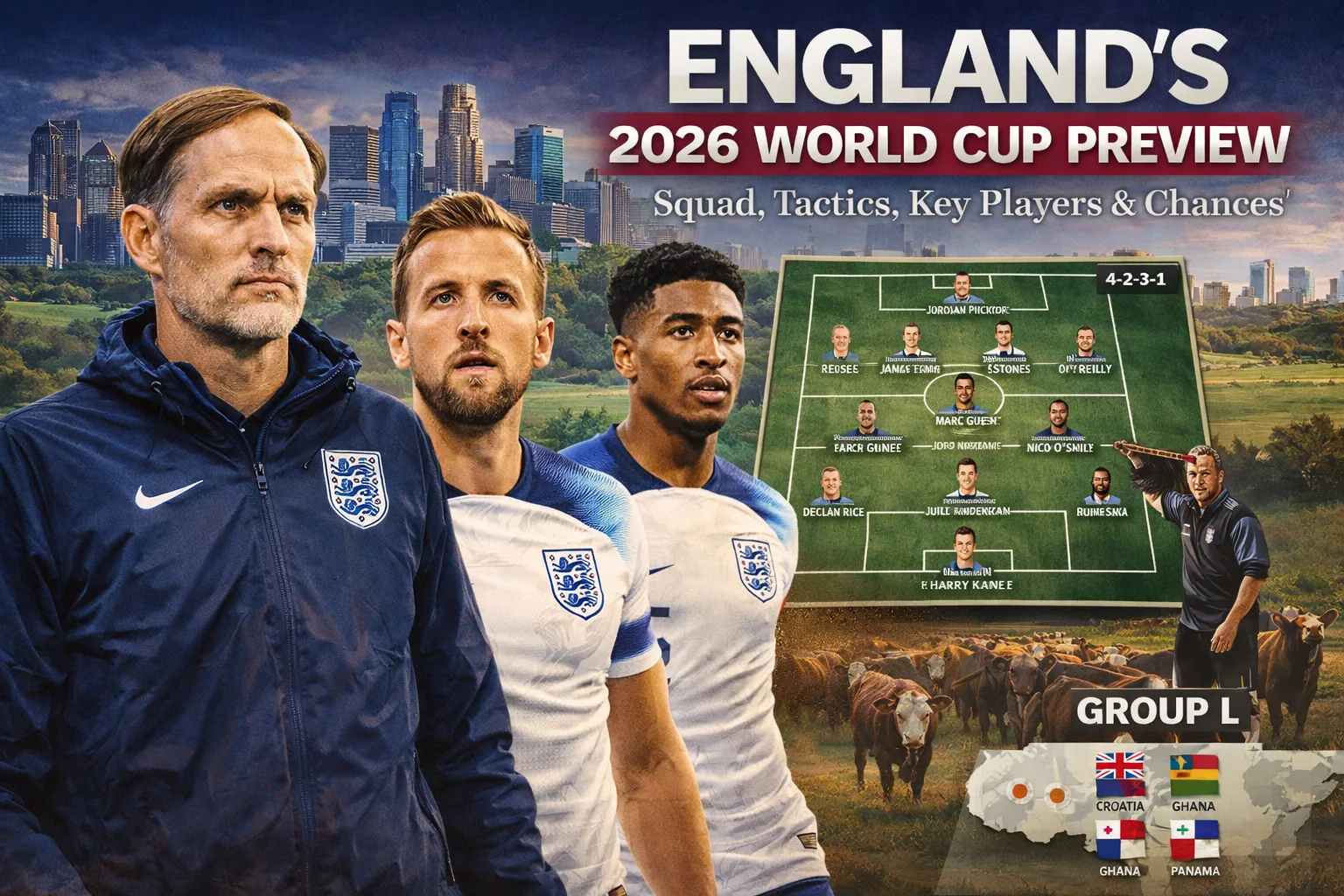
- Formation: 4-2-3-1 — with Declan Rice as deep shield and Bellingham as the creative engine
- Captain / top scorer: Harry Kane — 78 goals in 112 caps, all-time England record
- The defining question: Tuchel’s “team over talent” philosophy — does it solve what Southgate could not?
- Key concern: Left-back is Tuchel’s most openly unsettled position
- World Cup base: Swope Soccer Village, Kansas City, Missouri (requested, pending final approval)
SNIPPET BLOCK
England enter the 2026 FIFA World Cup under manager Thomas Tuchel — the first European nation to qualify for the tournament, having completed a perfect UEFA qualifying campaign (8 wins, 0 draws). They are in Group L alongside Croatia, Ghana, and Panama. England’s system is a 4-2-3-1 built around Declan Rice (holding midfielder), Jude Bellingham (creative engine), Harry Kane (all-time leading scorer, 78 goals in 112 caps), and Bukayo Saka (undroppable right winger). England have not won the World Cup since 1966. Tuchel’s stated philosophy is clear: “We don’t collect the most talented players. We collect the guys who have the glue and cohesion to be the best team.”
Part 1: The Manager — Thomas Tuchel’s New Challenge
Thomas Tuchel arrives at the 2026 World Cup as one of the most credentialled coaches in club football — and the most inexperienced international manager of any major contender.
His CV reads: Paris Saint-Germain (two Ligue 1 titles, 2020 Champions League Final). Chelsea (UEFA Champions League 2021, one of the most celebrated club coaching achievements of the decade). Bayern Munich (Bundesliga title, domestic cup). He is a tactically obsessive, intensely organized coach who has managed some of the world’s best players at the highest club level — but who had never managed a national team before taking the England job following Southgate’s Euro 2024 departure.
What he has done in the months since his appointment has impressed. England were the first European nation to qualify for 2026, with a perfect qualifying record (8 wins, 0 draws, 0 defeats). He has introduced clarity of selection purpose and stability of system that English football had been searching for.
But the most revealing thing about Tuchel’s England approach is not tactical — it is philosophical. His selection principle has been stated publicly and repeatedly, and it is genuinely different to what came before.
“We don’t collect the most talented players,” he said after naming a squad that surprised some observers with its inclusions and omissions. “We collect the guys who have the glue and cohesion to be the best team. Because we need to arrive as the best team. We will arrive as underdogs at the World Cup because we haven’t won it for decades and we will play against teams who have repeatedly won it during that time. So we have to arrive as a team or we will have no chance.”
That statement contains a self-aware honesty rarely heard from England managers. It acknowledges the weight of history, the talent ceiling of the squad, and the team-based solution Tuchel has chosen. Whether it translates to results — rather than simply admirable team spirit — is what 2026 will answer.
When challenged further on selection criteria, Tuchel was equally direct: “It will be very important that we don’t select just for talent, but also for what we need from a player. What the social skills are of a player, is he a good team-mate? Can he support if his role is maybe the supporting role?”
This is the context within which every England squad selection — including borderline omissions like Trent Alexander-Arnold and uncertain inclusions like Phil Foden — must be understood.
England’s World Cup base is planned for Swope Soccer Village in Kansas City, Missouri — a state-of-the-art training facility from which they will travel to each match venue and return after each game. Tuchel has spoken specifically about preparing for North America’s summer heat and has indicated that squad depth — allowing rotation and substitutions without quality loss — will be central to his tournament management approach.
Part 2: How England Play — Formation and Tactics
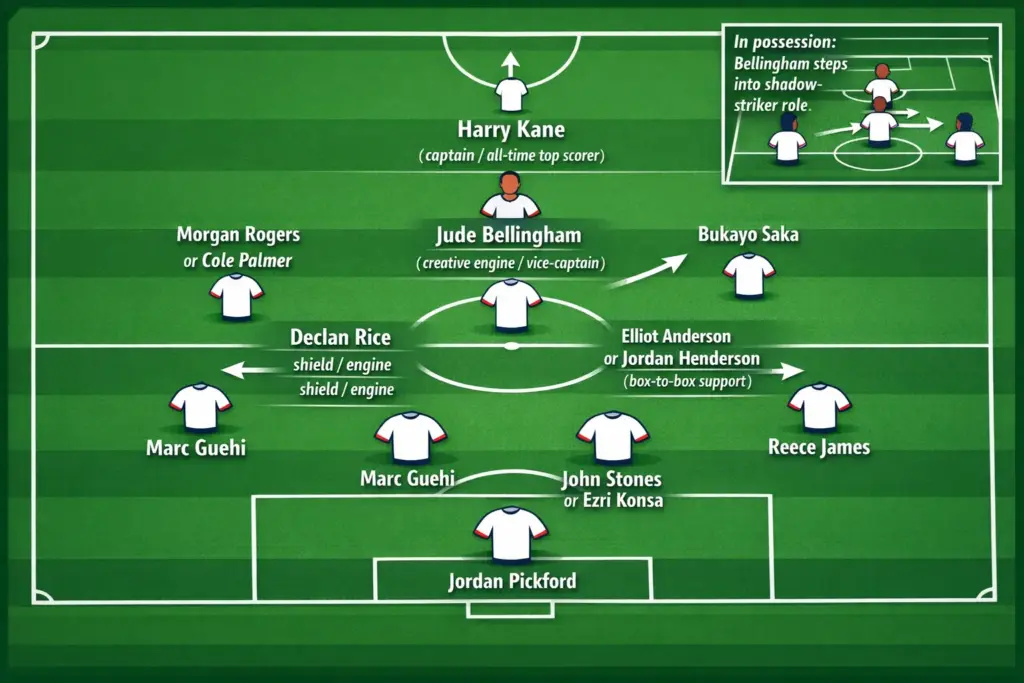
Figure 1: England’s 4-2-3-1 system under Thomas Tuchel — Rice shields, Bellingham creates
The Formation: 4-2-3-1
Tuchel changed England’s base structure from Southgate’s 4-3-3 to a 4-2-3-1. The difference matters.
What the 4-2-3-1 provides that the 4-3-3 did not:
In Southgate’s 4-3-3, England’s midfield was structured around three roughly equal roles — which occasionally left the defensive midfield position undermanned when England attacked and the three midfielders pushed forward simultaneously. The result: a team that occasionally looked exposed on the counter despite having excellent individual talent in midfield.
In Tuchel’s 4-2-3-1, the solution is structural. Two dedicated midfielders sit in front of the defense at all times — one (Rice) as the primary defensive shield, one (Anderson or Henderson) providing box-to-box support. This gives England a much more stable defensive foundation. Above them, Bellingham operates as the creative no.10 — free to arrive at goal-scoring positions without the defensive responsibility that constrained him in a flat three.
The result: a structure that protects the defense without sacrificing the attacking involvement of England’s two most important midfielders.
The Bellingham role:
In a 4-2-3-1, Bellingham as the central attacking midfielder is ideally suited to the way he naturally plays. He is not a traditional no.10 who holds position and distributes — he arrives into the penalty area, scores goals, and creates chances for Kane and the wide players. The 4-2-3-1 gives him that freedom because Rice covers the defensive space behind him.
Width and pressing:
Saka on the right provides England’s most reliable wide attacking threat — and his pressing intensity means the team’s right side is active without the ball as well as with it. The left side (Rogers, Palmer, or a wide attacker) provides balance. Kane drops into pockets of space, linking play and creating room for Bellingham and the wide players to arrive at.
Heat management and squad depth:
Tuchel has been explicit about the North American summer conditions. He wants a squad deep enough to rotate key positions without losing quality — particularly in central midfield and central defense, which are most affected by yellow card accumulation and fatigue across a 39-match tournament. Sky Sports reported he plans “two players for every position,” and that substitutions will be “vital” to managing heat impact on performance levels.
Part 3: England’s Key Players
Harry Kane — The All-Time Record and the First Trophy
England’s captain. Their all-time leading goalscorer with 78 goals in 112 caps — a record that continues to grow. Ranked the #1 striker in the world by FourFourTwo (December 2025).
At Bayern Munich in the 2025–26 season: 39 goals and 5 assists in 34 appearances across all competitions. Under Tuchel specifically: 9 goals in 9 international appearances.
Kane is the player England’s entire attacking structure is designed around. The wide players create space for him; Bellingham arrives into the penalty area beside him; Rice recycles possession to give the attack more attempts at breaking down defences. He is the finishing point of everything England build.
The narrative that follows him internationally is well-known: brilliant at club level, yet to win a major international trophy despite being at the center of England’s most competitive generation in decades. He won his first club trophy — the Bundesliga — with Bayern Munich in the 2024–25 season. The World Cup is the international equivalent he has not yet reached.
“If England has any chance of winning the World Cup, Kane’s goals will be crucial,” is how Bleacher Report summarized his importance in January 2026 — direct but accurate.
What to watch for: Kane’s movement before he receives the ball is his most underrated quality. He creates space for Bellingham and Saka by drawing centre-backs away from their positions. When he drops into midfield areas to link play, watch the runners arriving behind him — that is the combination that creates England’s most dangerous moments.
Jude Bellingham — The Creative Engine
The player who significantly influences England’s potential. At approximately 22 when the 2026 World Cup begins, Bellingham has already won La Liga and the Champions League at Real Madrid and led England to the Euro 2024 final. Tuchel named him one of his vice-captains alongside Jordan Henderson.
The fitness concern is real and worth acknowledging honestly: Bellingham suffered a hamstring injury that ruled him out of March’s international fixtures — he returned to full training in April and is expected to be match-fit for the tournament. The expectation across all reporting is that he recovers and is central to the squad. But his availability through the full tournament — eight matches over 39 days in North American heat — is the single most important fitness variable for England.
“He is very special, very special” — Jordan Henderson, speaking to the media about Bellingham’s character and impact on the England camp (Goal.com, December 2025).
What to watch for: Bellingham’s late runs into the penalty area — arriving from midfield when the opposition’s defensive shape has been stretched by wide movement. England’s most threatening moments come when he appears unmarked at the back post or cuts across the penalty area onto his right foot. He is also England’s best player in pressure situations — the bigger the moment, the more he tends to elevate.
Bukayo Saka — The Undroppable Constant
“The first name on the team sheet.” — Tribuna.com, December 2025.
Saka’s consistency and influence over the past three years have made him the foundation of England’s right side in a way that no other England wide player has been for decades. He provides pace, creativity, reliability under pressure, and an engine that allows Tuchel to trust the right side of his system regardless of what else changes.
His injury-affected start to the 2025–26 season is worth monitoring — but his output even while building back to full fitness (6 goals in 14 appearances) reflects the level Tuchel is working with.
What to watch for: Saka’s diagonal runs from the right touchline toward the penalty area — cutting inside off his left foot. Also watch his pressing intensity when England are out of possession: he is one of the few wide players in world football who works as hard without the ball as with it, which is central to Tuchel’s pressing demands.
Declan Rice — The Structural Anchor
Rice is the reason Tuchel’s 4-2-3-1 works defensively. Described as “the only no.8 who can be considered certain to go” beyond the headline names — his versatility between a deep defensive role and a more progressive box-to-box role gives Tuchel genuine tactical flexibility.
In Arsenal’s Premier League and European campaigns, Rice has developed from a pure defensive midfielder into a player who can carry the ball forward, arrive into shooting positions, and contribute as a genuine attacking threat. For England, Tuchel uses him primarily as the defensive shield — but his expanded range adds an unpredictability that England’s previous incarnations of this role did not carry.
Marc Guehi — The Defensive Foundation
50 international caps. Started every England match at Euro 2024 but one. Now playing at Manchester City — “playing at a higher level” and gaining Champions League experience that will directly improve his international performance.
Guehi is England’s most reliable centre-back — composed on the ball, strong in the air, and calm under pressure. His partnership option (Stones if fit, Konsa or Burn as alternatives) is one of the squad’s genuinely uncertain tactical questions, but Guehi’s own place is not in doubt.
The No.10 Competition — Rogers, Palmer, Foden
Behind Bellingham as the primary no.10, Tuchel faces his most competitive selection battle. Three credible options:
Morgan Rogers (Aston Villa): Has started six of Tuchel’s ten matches in charge — currently “arguably ahead of both Palmer and Foden in the pecking order.” Consistent, hardworking, tactically obedient — exactly the profile Tuchel’s team-first philosophy rewards.
Cole Palmer (Chelsea): Exceptional talent whose injury-affected season has cost him ground. Five goals and one assist in five domestic appearances under Chelsea’s new manager is encouraging form — “could yet make a late burst.”
Phil Foden (Manchester City): Won the 2023-24 Premier League Player of the Season award; has not yet recaptured that level this season. November squad was his first call-up since March 2025. Still in consideration — but no longer automatic.
Part 4: England’s Squad Overview
Likely Starting XI (Projected — 4-2-3-1):
| Position | Player (Club) |
|---|---|
| GK | Jordan Pickford (Everton) |
| RB | Reece James (Chelsea) |
| CB | Marc Guehi (Manchester City) |
| CB | John Stones (Manchester City) — if fit; Ezri Konsa (Aston Villa) as alternative |
| LB | Nico O’Reilly (Manchester City) — 3 England starts; or Dan Burn (Newcastle) — 4 England appearances at left-back under Tuchel |
| DM | Declan Rice (Arsenal) |
| CM | Elliot Anderson (Nottingham Forest) or Jordan Henderson (Ajax) |
| RAM | Bukayo Saka (Arsenal) |
| CAM | Jude Bellingham (Real Madrid) — vice-captain |
| LAM | Morgan Rogers (Aston Villa) or Cole Palmer (Chelsea) |
| ST | Harry Kane (Bayern Munich) — captain |
Squad Depth by Position:
Goalkeepers: Pickford and Dean Henderson confirmed. Nick Pope, James Trafford, and Aaron Ramsdale competing for the third slot.
Defenders: Guehi anchors the center-back position. Stones (fitness dependent), Konsa, Burn, Jarell Quansah provide coverage. Reece James is first choice right-back. Left-back — O’Reilly (3 England starts) is currently ahead, with Dan Burn (4 appearances at left-back under Tuchel) providing experienced cover. The position remains Tuchel’s most openly unsettled.
Midfielders: Rice is certain. Bellingham is certain if fit. Anderson has cemented a place. Henderson provides experience. The competition for remaining midfield slots involves Kobbie Mainoo (currently out of favor), Adam Wharton, and Ruben Loftus-Cheek.
Forwards/Attackers: Kane is locked in. Saka is locked in. Rogers is currently favoured at no.10. Palmer and Foden compete for wildcard attacking slots. Marcus Rashford, Anthony Gordon, Jarrod Bowen, and Ollie Watkins (second striker) compete for remaining forward positions. Tuchel has indicated he will likely take two strikers.
Notable absences from recent squads (as of February 2026): Trent Alexander-Arnold (out since summer defeat to Senegal), Kyle Walker (may have seen international career end), Jack Grealish (significant and prolonged omission), Kobbie Mainoo, Mason Mount, Harry Maguire, Luke Shaw.
Part 5: Group L — England’s Path Through the Group Stage
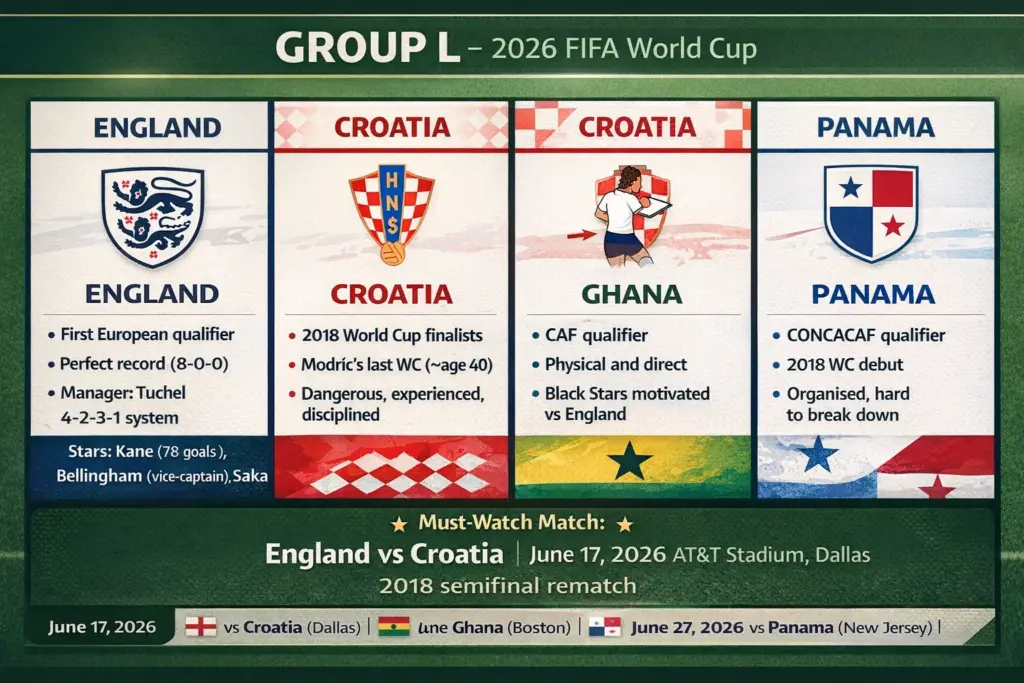
Figure 2: Group L — England, Croatia, Ghana, Panama
| Match | Date | Venue | Key Fact |
|---|---|---|---|
| England vs Croatia | June 17, 2026 | AT&T Stadium, Dallas — 4pm ET / 9pm UK | 2018 World Cup semifinal rematch; Modrić’s final WC (~age 40) |
| England vs Ghana | June 23, 2026 | Gillette Stadium, Foxborough/Boston — 5pm ET / 10pm UK | Ghana motivated; England’s most physical group test |
| Panama vs England | June 27, 2026 | MetLife Stadium, New Jersey — 3pm ET / 8pm UK | Group L finale; Panama’s third World Cup |
Opponent by Opponent
Croatia — The Rematch:
Croatia beat England 2–1 after extra time in the 2018 World Cup semifinal in Moscow. At Euro 2020, England beat Croatia 1–0 at Wembley in the group stage. The 2026 group stage meeting adds a third chapter to a rivalry that defines both nations’ modern World Cup stories.
Luka Modrić will be approximately 40 years old — widely expected to be playing his final World Cup. Croatia are not the same team that reached the 2018 Final, but Modrić’s ability to control tempo and the defensive organization that characterizes Croatian football under their federation system remain. England are clear favorites — but dismissing Croatia based on age or expectation would be a mistake. AT&T Stadium on June 17 is the tournament’s most narrative-rich group stage fixture involving England.
Ghana:
Ghana bring physical intensity and a motivation that is underappreciated. Their 2010 World Cup run (quarterfinal, eliminated by Uruguay via a controversial handball incident) remains a touchstone for African football’s near-miss at the highest level. England vs Ghana carries a specific edge — Ghana qualified in the same CONMEBOL-adjacent ecosystem as other African nations who will arrive in North America wanting to prove something. England need to be organized rather than complacent here.
Panama:
Panama have appeared at one previous World Cup — Russia 2018 — where they lost all three group matches (including 6–1 to England, England’s biggest World Cup win in decades). The 2026 group stage encounter is the finale of Group L, with England likely having already secured qualification at that point. Panama are the group’s least dangerous side on paper but will be well-organized and motivated.
England’s realistic group expectation: Win the group. The bracket logic is the same as Spain and Argentina — finishing first gives the most favourable projected Round of 32 path. Given England’s quality relative to Croatia, Ghana, and Panama, topping Group L is the baseline expectation. The Croatia match is the only genuine uncertainty.
Part 6: England’s World Cup History — The Context
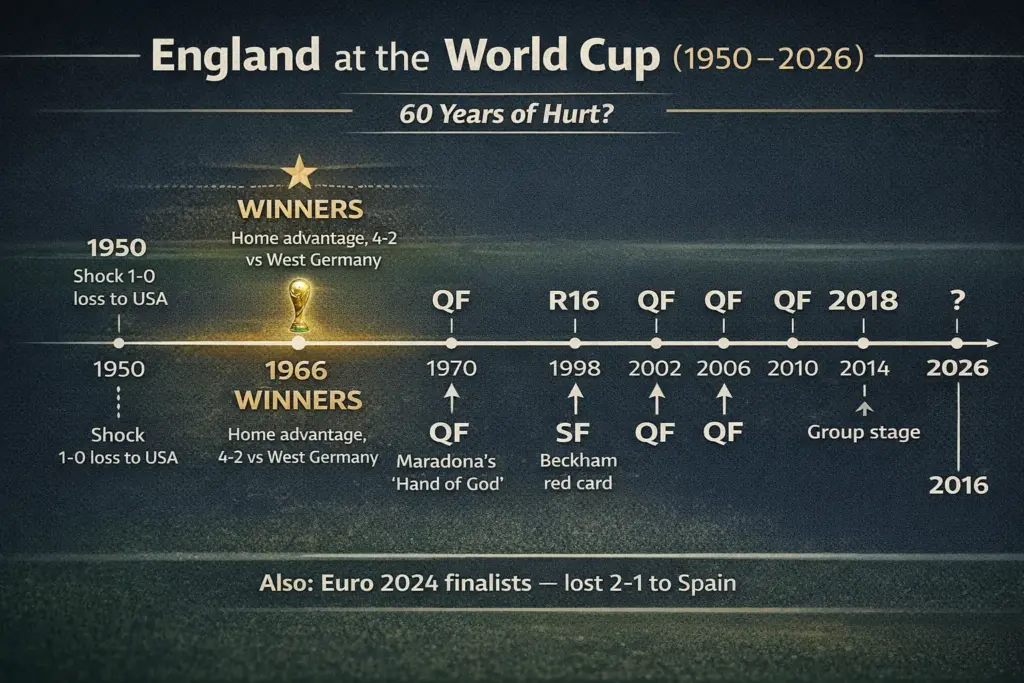
Figure 3: 60 years of hurt — England’s World Cup journey from 1966 to 2026
England won the World Cup once — at home in 1966, defeating West Germany 4–2 in the final at Wembley. Geoff Hurst scored a hat-trick; England’s legendary manager Alf Ramsey guided the team.
Since then: quarterfinals (multiple), semifinals in 1990 and 2018, quarterfinal in 2022. Euro 2024 runners-up (lost to Spain 2–1).
1990: Semifinal at Italia ’90 — “Three Lions on a Shirt” and Gazza’s tears. Lost to West Germany on penalties. The emotional high-water mark for a generation.
1998–2014: A decade and a half of quarterfinal exits and early eliminations. The Golden Generation of Gerrard, Lampard, Beckham, and Rooney did not translate club quality into international success. Gerrard himself described that era in 2025 as having been “egotistical losers” — a brutally honest self-assessment of why talent without collective cohesion fails at international level.
2018: Gareth Southgate’s first major tournament — England reached the World Cup semifinal, their best performance in 28 years. Lost to Croatia 2–1 after extra time.
2022: Quarterfinal — beaten by France. England had been competitive but were eliminated by the eventual finalists.
Euro 2024: Final — the furthest England had ever gone in a European Championship. Lost 2–1 to Spain in Berlin, Spain’s fourth European title.
The trajectory under Southgate was real and meaningful — from a squad that underperformed relative to talent to one that consistently reached the later stages. Tuchel inherits that foundation, adds his Champions League-winning coaching credentials, and faces the question: can he convert “reaching finals” into “winning them”?
Part 7: Strengths, Weaknesses and Realistic Chances
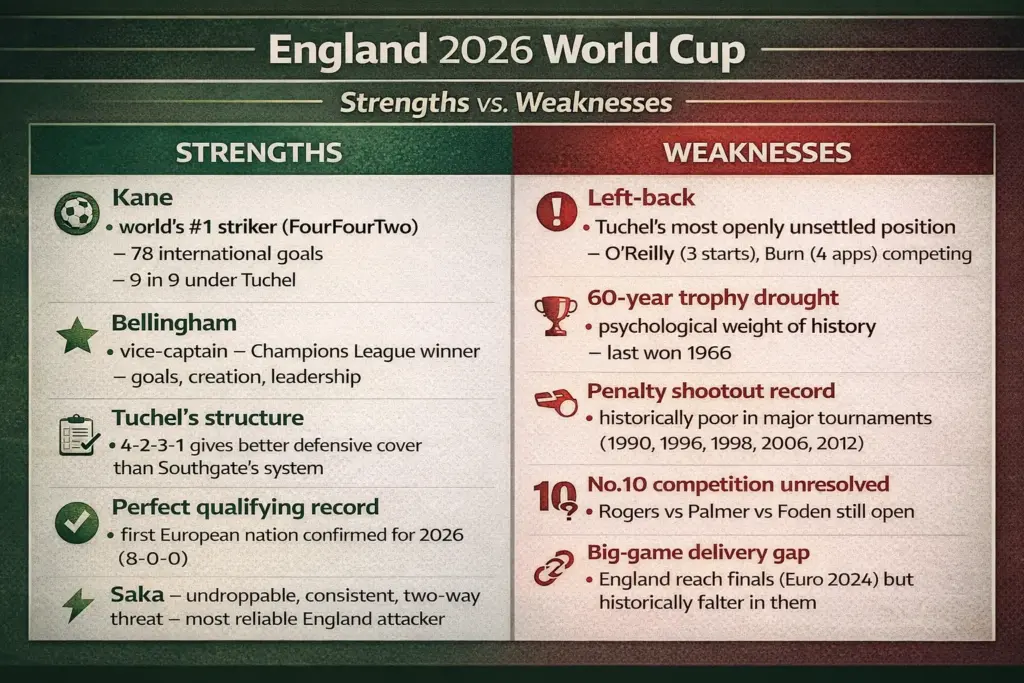
Figure 4: England’s World Cup prospects — what works and what doesn’t
Strengths
| Strength | Detail |
|---|---|
| Kane as the world’s #1 striker | FourFourTwo‘s December 2025 ranking placed Kane at the top of the world striker list — ahead of Haaland, Mbappé. Bayern form: 39 goals, 5 assists in 34 appearances (2025–26). 9 goals in 9 games under Tuchel. |
| The Bellingham factor | Champions League winner, La Liga winner, Euro 2024 finalist — at 22. Proven big-game performer. |
| Tuchel’s structural improvement | 4-2-3-1 with Rice as defensive anchor gives more stability than Southgate’s 4-3-3. Bellingham freed from defensive duties. |
| Preparation time | First European qualifier → maximum preparation in Kansas City base; longest runway of any European nation for North American conditions. |
| Saka’s consistency | Most reliable England wide attacker in decades; two-way threat with pressing intensity. |
Weaknesses
| Weakness | Detail |
|---|---|
| Left-back unsettled | Every other position has a clear first choice. Nico O’Reilly (age 20, 3 England starts) currently ahead; Dan Burn provides cover (4 appearances at left-back under Tuchel). |
| 60-year trophy drought | Psychological weight of history — England have reached finals but not won since 1966. |
| Penalty shootout record | Historically poor — exits via shootout in 1990, 1996, 1998, 2006, 2012. Unclear if Tuchel has specifically addressed this. |
| No.10 competition unresolved | Rogers vs Palmer vs Foden still open — healthy competition, but potential distraction if wrong choice made in key match. |
| Big-game delivery gap | England reach finals (Euro 2024) but falter in them. Tuchel’s “team over talent” philosophy is direct response — unproven at tournament level. |
Part 8: Scenario-Based Assessment — Can England Win in 2026?
Clearly labelled as analysis — not a prediction or guarantee.
Group stage expectation: Top Group L. The combination of England’s quality and the group’s composition makes this the baseline. Croatia is the only match with genuine uncertainty.
The optimal path: England top Group L → navigate the Round of 32 against a manageable opponent → reach the quarterfinals with squad energy intact. From the quarterfinals, England’s depth, Kane’s goal-scoring, and Bellingham’s influence make them competitive against any opponent in a single-match elimination. The semifinal is where England’s tournament is typically won or lost.
The risk scenarios:
- Bellingham is not fully fit across the whole tournament due to the hamstring issue — England’s ceiling drops significantly if he is playing at 70–80%. He returned to full training in April and is expected to be match-fit, but fitness across 39 days in heat remains a variable.
- Left-back is exposed by a quality wide attacker — several teams in the bracket have elite wide players who target precisely that kind of uncertainty
- England reach a penalty shootout in a knockout match — historically, this is England’s weakest link
- The no.10 question is answered wrongly — a key match turns on a moment where the wrong creative option is on the pitch
The honest verdict: England are, for the first time in a generation, a genuine World Cup contender rather than a participant who hopes for the best. Tuchel has a clearer system, a more structured squad-building philosophy, and demonstrably better defensive organisation than his predecessors. Kane is at the peak of his powers. Bellingham is one of the world’s best players.
The question is not whether England have the talent to win — they do. The question is whether they can sustain the mental and tactical execution across eight consecutive knockout-level matches that a World Cup title requires. That is the question 60 years of history has posed, and which 2026 must answer.
Common Myths — Corrected
“England always chokes at the big moment.”
The pattern is real, but the framing oversimplifies it. England have reached more major tournament semifinals and finals since 2018 than in the previous 40 years combined. The issue is not choking — it is the specific, narrow gap between reaching finals and winning them. Tuchel’s approach is a direct structural response to that gap.
“Trent Alexander-Arnold should be in the squad.”
As of February 2026, Alexander-Arnold has not played for England since a defeat to Senegal over the summer. His exclusion reflects Tuchel’s “team over talent” philosophy — a player who has not been in the national team setup for months cannot provide the cohesion Tuchel requires. Whether that changes before the May 2026 squad announcement is possible, but it requires more than just talent to earn a place under this manager.
“England’s attacking quality is the problem.”
It has never been the attacking quality. England have had exceptional attacking players throughout the era since 1966. The issue has historically been defensive structure, psychological consistency in eliminations, and penalty preparation. Tuchel’s solution — better defensive structure via the 4-2-3-1, and a team-first culture — addresses the real problem more directly than any previous England manager.
“England will be easy for any good team to beat.”
England qualified with a perfect European record — no defeats, no draws. They have the world’s #1 striker (FourFourTwo‘s ranking), one of the world’s best midfielders, the most reliable right winger in English football history at his position (Saka), and a Champions League–winning manager. Whoever meets England in the knockout stages will not find it easy.
“If England reach a final, they’ll win this time.”
Reaching a final and winning a final are separated by everything that matters. Euro 2024 showed England can reach a final — Spain showed what happens when you face a team with a clearer system, better individual quality at key positions, and the winning experience England lack. The goal is not to reach a final; it is to build a team capable of winning one.
How to Watch England at the 2026 World Cup
UK Broadcasters
- ITV and BBC will share live coverage of all England matches
- Matches will be streamed live on ITVX and BBC iPlayer
- Radio coverage on BBC Radio 5 Live and TalkSPORT
US Broadcasters
- Fox Sports holds English-language rights
- Telemundo holds Spanish-language rights
- All matches stream on FuboTV, Peacock, and Fox Sports app
Other Regions
- Canada: CTV, TSN, RDS
- Australia: Optus Sport
- New Zealand: Sky Sport
- Europe: Check local broadcasters
FAQs: England at the 2026 World Cup
What group is England in at the 2026 World Cup?
Group L — Croatia, Ghana, and Panama.
When does England play at the 2026 World Cup?
June 17 vs Croatia (AT&T Stadium, Dallas, 4pm ET / 9pm UK); June 23 vs Ghana (Gillette Stadium, Foxborough/Boston, 5pm ET / 10pm UK); June 27 vs Panama (MetLife Stadium, New Jersey, 3pm ET / 8pm UK).
Who is England’s manager at the 2026 World Cup?
Thomas Tuchel — appointed after Gareth Southgate’s departure following Euro 2024. Previously won the UEFA Champions League with Chelsea in 2021. England were the first European nation to qualify for 2026 under his management.
What formation does Tuchel use with England?
A 4-2-3-1 — with Declan Rice as the deep defensive midfielder, Jude Bellingham as the creative attacking midfielder, Harry Kane as the center-forward, and Bukayo Saka as the right attacking midfielder.
Who is England’s captain at the 2026 World Cup?
Harry Kane — England’s all-time leading scorer with 78 goals in 112 international caps (as of January 2026). Jude Bellingham and Jordan Henderson are vice-captains.
Will Jude Bellingham play at the 2026 World Cup?
Bellingham is expected to play — he is one of Tuchel’s vice-captains and central to England’s system. A hamstring injury ruled him out of March fixtures, but he returned to full training in April and is expected to be match-fit for the tournament.
Is Trent Alexander-Arnold in the England squad?
As of February 2026, Alexander-Arnold has not featured for England since the summer. His absence reflects Tuchel’s team-cohesion philosophy. Whether he is recalled before the May squad announcement is possible but unconfirmed.
What is England’s World Cup history?
England won the World Cup once — in 1966 at home, beating West Germany 4–2 in the final. Since then: quarterfinals (multiple), semifinals in 1990 and 2018, quarterfinal in 2022. Euro 2024 runners-up (lost to Spain 2–1).
Where is England’s World Cup base?
Swope Soccer Village, Kansas City, Missouri — England have submitted a request (pending final approval) to be based there, travelling to each match venue from Kansas City.
How can I watch England matches?
In the UK: ITV and BBC (live), ITVX and BBC iPlayer (streaming). In the US: Fox Sports (English), Telemundo (Spanish), streaming on FuboTV, Peacock, and Fox Sports app.
Can England win the 2026 World Cup?
As scenario-based analysis: England are a genuine contender — world #1 striker, one of the world’s best midfielders, a Champions League–winning manager, and a perfect qualifying record. Their primary risk factors are penalty shootout vulnerability, Bellingham’s full fitness, the unsettled left-back position, and the historical pattern of losing when matches matter most. The 2026 World Cup is England’s best objective opportunity since 1966.